
Nature

Four members of the RSHG Natural History Team took part in the RSPB Big Garden Birdwatch survey on Saturday 26th January 2008 counting the number of birds spotted in Ryde Cemetery.
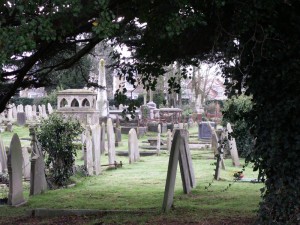
The new year brought rain but it was still a pleasant and peaceful walk in Ryde Cemetery this morning.
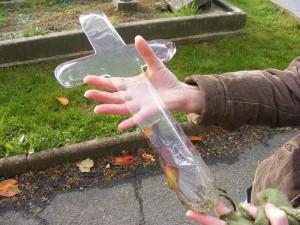
There was a heavy frost in the cemetery yesterday morning and although most of it had melted by the time we met up at 10:30 for our weekly Transcribing session Kate found this beautiful ice cross in a shaped flower holder on one of the graves.
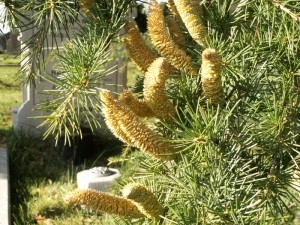
It's November and the large, majestic Deodar Cedar tree in the Cemetery is in flower.
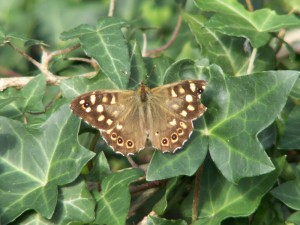
Speckled wood butterflies have brown wings with creamy-yellow spots and a small dark eye spot near the tip of the upper wing. The lower wings have a row of dark brown eye spots. The wingspan is about 50mm.
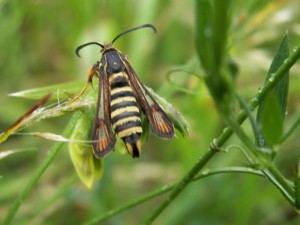
Locally distributed in the southern half of Britain, this species inhabits chalky soils including downland, quarries and sea-cliffs.
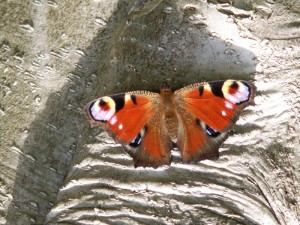
The Peacock Butterfly gets its name from the similarity between the eye pattern on its wing and those on the Peacock’s tail feathers.
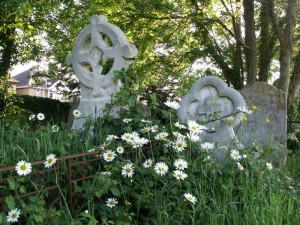
In early June parts of the cemetery are covered with this pretty white flower.
The Ox-Eye daisy is a typical meadow flower; it thrives in a wide range of conditions and prefers heavy and damp soils.
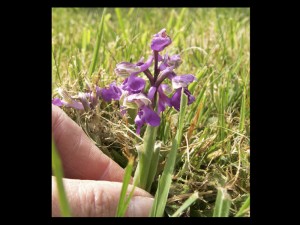
In a part of the Old Parish Cemetery, a small patch of bright colour caught my eye and, getting down on my hands and knees to investigate, I saw what looked like a tiny little orchid.
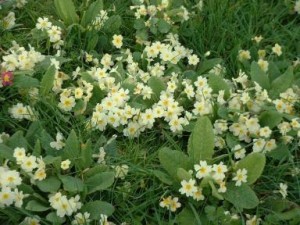
The first signs of Spring are the Primroses that grow in abundance throughout the Old Parish Cemetery